Many older or manual parts washers tend to overuse natural resources, resulting in high utility bills and unnecessary stress on the environment. By adopting more efficient cleaning methods, businesses can lower their environmental impact while cutting costs and improving compliance. These are key goals of sustainable manufacturing.
In this article, we explore practical strategies for companies to develop a robust parts cleaning process, focused on energy-efficient parts washers that benefit both the planet and the bottom line.
How Can Sustainable Manufacturing Help Me?
Traditional parts washing often waste natural resources. For example, manual cleaning typically involves excessive rinsing, while older parts washers may heat water continuously, or run at temperatures that are higher than needed.
In the EU, manufacturing alone accounts for 14% of total water use (28 billion m³/year), yet 40% of that could be saved through simple sustainability measures, such as water-recycling systems and cooler temperatures. ¹
How Can We Become a More Sustainable Plant?
Resource Efficient Parts Washers
One of the most effective ways to become a more sustainable plant is to invest in modern, energy-efficient parts washers. These systems use optimised heating cycles, improved cleaning solutions, and automated processes that minimise resource consumption without sacrificing cleaning quality. Automation and optimised cleaning process also help standardise results, preventing waste caused by human inefficiency and the need for rework.
Filtration and Water Reuse Systems
Closed-loop cleaning uses filtration and water recycling systems to clean and reuse water multiple times. This drastically lowers water consumption and supports sustainability in manufacturing by reducing waste and preserving resources.
Lower Temperature Cleaning Solutions
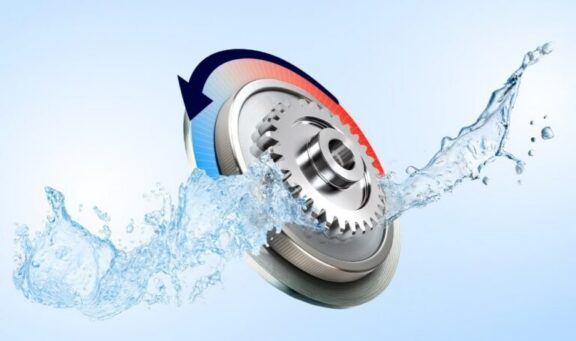
Traditional high-temperature cleaning can require substantial energy to heat water. Cleaning parts at lower temperatures can significantly reduce energy use while maintaining (or even improving) cleaning performance. Lower temperatures are also gentler on the cleaned parts, prolonging its life.
Automate and Standardise Cleaning Processes
Automated cleaning systems deliver consistent cleaning results and precise control over energy use. This is often a far more sustainable option versus manual cleaning or even the use of human-operated machines, such as pressure washers and jet guns.
Regular Maintenance and Audits
Routine maintenance keeps cleaning equipment running at peak efficiency, helping to identify inefficiencies, prevent waste caused by worn parts or system faults, and ensure continuous improvement.
Our sustainability initiatives are driving results for both us and our 50,000+ global customers. We’re reducing environmental footprints and improving our circular business model, one service at a time.
How Safetykleen Supports Sustainable Manufacturing
We understand the importance of combining operational efficiency with environmental responsibility, which is why we continuously invest in our parts washers and chemistries, to achieve optimal cleaning while using less resource.
Full-Service Support
Our end-to-end support starts with a full review of your current cleaning processes, during which our experts offer practical ways to reduce your impact on the environment. We also regularly service the Safetykleen parts washer installed at your site to ensure your resource consumption stays minimal.
Machines
We are always looking to improve sustainability for both us and our customers. A focus is energy efficient machines.
Our most modern machine, the Sonickleen Eco Ultrasonic parts washer, saves up to 57% energy through redesigned heating components and insulation that is seven times thicker, significantly helping support manufacturing and sustainability goals.
Our we also offer built-in filtration and oil skimming technologies on some of our machines, which helps reduce waste water.
Chemistry
We heavily invest in next-generation cleaning solutions that operate at lower temperatures and with less chemistry. This helps improve cost, safety and sustainability in manufacturing.
Conclusion
Cutting resource use in parts cleaning is a win-win for businesses and the environment. By upgrading to modern equipment and automating processes, companies can lower utility bills, reduce industrial waste, and improve compliance — all while moving toward more sustainable production.
If you want to explore how energy-efficient cleaning solutions can benefit your operations, contact Safetykleen today. Let’s work together to drive sustainability in manufacturing and operational excellence in your parts washing processes.
Sources