In modern manufacturing, the cleanliness of parts is crucial to product quality and operational efficiency. However, cleaning intricate, delicate, or high-value components presents unique challenges. Ultrasonic cleaning has emerged as a groundbreaking solution, addressing these issues with precision and care.
The Challenges of Cleaning Specialised Parts
1. Intricate Parts
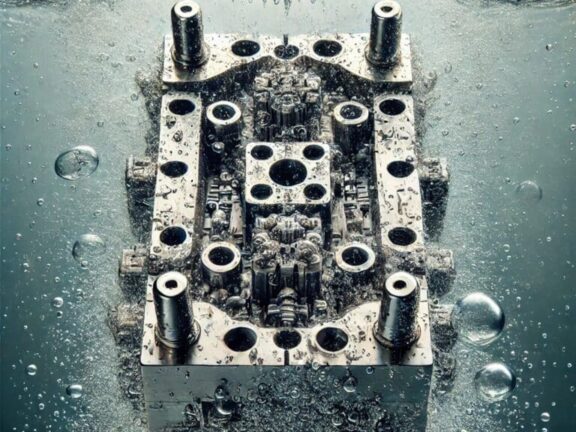
Manufacturing often involves components with complex geometries, such as intricate molds and turbine blades. Traditional cleaning methods, like manual brushing or spray washing, struggle to reach tight crevices and internal cavities, leaving contaminants behind.
2. High-Value Parts
Expensive components and precision tools require meticulous cleaning without risking damage. Even minor defects caused during cleaning can lead to costly replacements or compromised performance.
3. Delicate Materials
Parts made of thin metals, plastics, or glass are particularly vulnerable to scratches, deformation, or chemical degradation when exposed to harsh cleaning methods.
Why Ultrasonic Cleaning?
Ultrasonic cleaning works using high-frequency sound waves in a cleaning solution to create microscopic bubbles. These bubbles Implode on the surface of a part, creating a powerful yet gentle cleaning action known as cavitation. Together with the right non-hazardous cleaning solution, this process offers several distinct advantages.
Non-Abrasive Cleaning
The acoustic cavitation effect removes contaminants with minimal contact, making it ideal for fragile or intricate components with no abrasion. There’s no risk of scratching or damaging surfaces, even on soft or delicate materials.
No Hazardous Chemicals
Ultrasonic parts washers can eliminate the need for aggressive chemicals. Water-based cleaning solutions, combined with ultrasonic action remove oils, grease, carbonised residue and other particulates, making it safer for workers and the environment.
Effective at Lower Temperatures
Ultrasonic parts cleaners work efficiently at lower temperatures compared to traditional methods, protecting heat-sensitive materials while reducing energy consumption.
Uniform Cleaning
Unlike manual or spray methods, ultrasonic cleaners reach every part of a component, ensuring consistent cleaning results — even for intricate parts cleaning.
Automated Cleaning
Ultrasonics are automatic cleaning machines. Once loaded with parts for cleaning, the operator can set the cleaning time and temperature and then leave the machine to do its work. This frees staff to work on other tasks and improves productivity.
Enhanced Longevity: Non-abrasive cleaning preserves part integrity, reducing the need for replacements.
Suitable for batch cleaning: Large Ultrasonic Cleaners allow for batch cleaning, reducing downtime
Materials Suitable for Ultrasonic Cleaning
Ultrasonic cleaning is effective on a wide range of materials, including:
Metals: Steel, aluminum, titanium.
Plastics: Delicate polymers used in plastic manufacture and automotive applications.
Glass and Ceramics: Often used in optics and laboratory equipment.
Applications Across Industries
The versatility of ultrasonic cleaners has made them indispensable in several industries. These are just some of its applications:
Rubber and Plastics: Removes residues such as mold release agents on intricate and delicate parts.
Metalworking: Removes oil, grease, and metal shavings from parts, enhancing precision and preparation for further processing.
Machinery and Equipment: Removes dirt, rust, and buildup from intricate machinery components and tools.
Automotive and Aerospace: Removes grease, carbon deposits, and contaminants from intricate parts, improving performance and reliability.
Printing: Clears dried ink, debris, and blockages from nozzles and components.
Medical and Pharmaceutical: Ensuring sterility and compliance with rigorous hygiene standards.
Energy (Oil, Gas, and Renewable): Removes oil, sludge, and corrosion from equipment like turbines and heat exchangers.
This is how Ultrasonic cleaning compares to some of the most common alternative cleaning methods:
Cleaning method
How It Works
What It’s For
In Comparison
Immersion / Dip Cleaning
Parts are submerged in a cleaning solution, with heat, without agitation, but require the use of aggressive chemicals to clean parts
Cleaning multiple intricate parts simultaneously.
Ultrasonics clean faster, more thoroughly and reduce the need for high temperatures and incorporate gentle agitation.
Spray Cleaning Systems
High-pressure jets spray cleaning solutions onto parts to remove contaminants.
Large parts with accessible exteriors.
Ultrasonics cleans cavities and surfaces uniformly, which spray systems cannot achieve.
Manual Cleaning
Workers use brushes, swabs, or tools to clean parts by hand.
Small batches or parts requiring close inspection.
Ultrasonics automate cleaning, save labour costs, and eliminate inconsistencies in manual methods.
Solvent Cleaning
Chemical solvents dissolve contaminants, often combined with immersion or spray methods.
Removing oils, greases, or residues from parts.
Ultrasonics reduce the need for harsh solvents, making the process safer and more environmentally friendly.
Specialised Washing Machines
Custom systems integrate spray, immersion, or other cleaning techniques.
High-volume cleaning of industrial parts.
Ultrasonics provide more thorough cleaning for intricate designs, ensuring no residue is left behind.
Cleaning intricate, delicate, and high-value manufacturing parts doesn’t have to be a daunting task. Ultrasonic cleaning offers an efficient, safe, and eco-friendly solution that meets the demands of modern manufacturing. By investing in this advanced technology, industries can enhance product quality, reduce costs, and achieve unparalleled cleanliness with confidence.