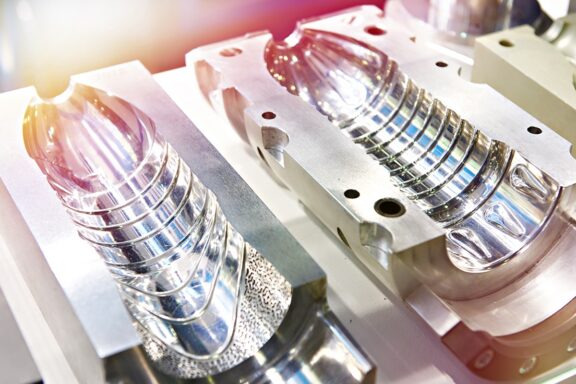
Industrial moulds have a direct influence on production quality, downtime and tool life. Regular, effective cleaning is an important part of preventive maintenance, particularly for complex moulds used in high-volume production.
Why does industrial mould cleaning matter?
Industrial moulds are used across processes including injection, compression and hot moulding. They may produce thousands of components over their working life, making consistent maintenance essential for quality, reliability and equipment longevity.
What happens when moulds are not maintained?
Poorly maintained moulds can contribute to unplanned downtime, additional repair and maintenance costs, production losses and non-conforming batches. Preventive maintenance helps identify wear and damage before they become larger production problems.
What contaminants need to be removed?
Depending on the process, moulds can accumulate release agents, lubricating oils, polymer residues, metal residues and other deposits. These contaminants can build up in detailed areas and affect the performance and dimensional accuracy of subsequent production.
Why can manual cleaning be a problem?
Manual cleaning with cloths and solvents can be time-consuming and may produce inconsistent results, particularly when moulds have complex geometries or small features. Abrasive techniques such as blasting can also risk damaging critical surfaces.
How can automated cleaning improve consistency?
Automatic parts washing can standardise the cleaning process by applying consistent chemistry, mechanical action and cleaning times. For complex moulds with small or difficult-to-reach features, ultrasonic cleaning can provide additional cleaning action throughout the immersed component.
Cleaning as part of preventive maintenance
A repeatable cleaning process makes inspection easier and supports a planned approach to mould maintenance. The result is a cleaner, more controlled process that can help protect tool life and production quality.